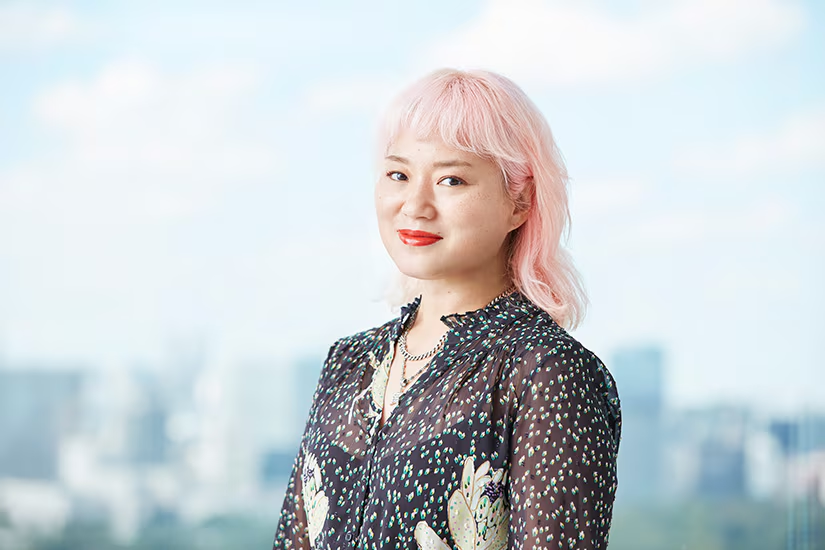

Chef, business owner, and mother Tomo Kurihara
hopes for the future after battling illness.
October is Breast Cancer Campaign Month. Since the late Evelyn H. Lauder established the campaign in 1992 using the pink ribbon as its symbol, Estée Lauder has been running the breast cancer campaign to encourage solidarity among people around the world and raise awareness for creating a world without breast cancer. 2022 marks the 30th anniversary of the campaign, and the theme is “30 Years of Bonds: Ending Breast Cancer.” The campaign, “Pink Ribbon Voices,” allows participants to record their “wishes to end breast cancer” and share them on social media, which will support breast cancer research and education.
Breast cancer is the most common cancer among women in Japan, affecting one in nine women. In the early stages, it is difficult to detect because there are almost no symptoms. However, because it is a disease that can be cured if detected early, regular examinations are important.
Our bodies are deeply connected to our present and future. When planning your life or career, or when you want to take on a new challenge, what if you were faced with an illness? To cherish all your own possibilities, we spoke with Tomo Kurihara, a chef who runs her own fish wholesale business and is openly sharing her experience battling breast cancer while raising her children.
– Why did you decide to start a fish wholesale business in your late 30s, after building a career as a chef? Weren’t you scared of jumping into a completely new world?
When I was 35, I was embarrassed that I couldn’t fillet fish, even though I was a chef, so I started working in Tsukiji. I thought, “If I want to learn how to fillet fish, Tsukiji is the place!” If I had thought of going to a cooking class at that point, my life might have been different, but I ended up marrying someone I met in Tsukiji and shifted all my work to Tsukiji. If I hadn’t, I probably wouldn’t have ended up working in a job specializing in fish. It was such a major turning point in my life. Of course, it took courage, but I’ve always been a bit of a show-off, so I was embarrassed to start something from scratch and didn’t want anyone to know. It wasn’t that I chose this type of work because I wanted it, but more than anything, I felt embarrassed that I couldn’t fillet fish. I was sure people would wonder why I couldn’t fillet fish even though I was working as a chef.

– What was it like actually diving into the world of Tsukiji?
It was tough. I thought I was used to standing, but I couldn’t sit down from the time I came to work in the morning until I cleaned up in the evening. I was desperate. I was also afraid of getting told off. I got run over by carts in the market many times…it actually didn’t hurt that much. But while it was scary, it was fun. I was nervous when I first took the plunge, but it’s always fun to learn something new. And it was delicious! I was immediately put in charge of preparing meals, which was a challenge because I’d rarely cooked fish dishes before.
– Did you have an image in your mind of what a chef should be like?
Yes, I did. I don’t wear makeup, and I don’t dye my hair. I wear white shirts with chinos or jeans, and I think cleanliness is the most important thing. I actually liked a flashy style, but I was born into a family of chefs, and I thought if I was going down that path, I’d better pretend to be that way too. If you call yourself a chef, you won’t get work unless you give off a clean impression. Especially in advertising. I’ve been getting offers lately because I’ve had my hair this color for years, but when I first changed it, I’d ask, “Is it okay if my hair is pink?” and get turned down with, “Sorry, let’s just pretend it never happened.” I also love cute nails, but I have to remove them. For example, when I have a photo shoot, the staff will say, “It’s Tomo-san’s policy, so we’ll make sure your hands aren’t visible in the photos, so don’t worry,” but I feel bad about it, so I’ll take them off.
– Do you feel that society has formed an image of what a chef should be like?
I think that’s very true. After all, there’s an image that it’s better not to have bright red hands when handling food. Overseas, there are a lot of chefs who enjoy nails and tattoos. I hope that Japan will gradually become like this, but I’m quite conservative myself, so it bothers me. There’s a deeply rooted image of how things should be. But now I’m a fishmonger, rather than a chef. So I think that’s why I can enjoy makeup and nails.
– How did you maintain a balance between your role as a chef and your true self? What inspired you to develop your current style?
It was definitely my illness that triggered it. At the time, I was a little tired of the clean appearance I had as a chef. But when I got breast cancer, I realized, “Maybe this is what I want to do.” Around the time I lost my hair and didn’t want to see people anymore, I started to think, “Running a company is fun.” When I realized that my place in the world wasn’t just as a chef, that there were other places to cook, I automatically became the person I am today. If I’d only worked as a chef, I’d have opportunities to appear in media and advertisements. But for me, that was sometimes depressing. When I thought it would be nice to have the opportunity to cook my own food in the world of fish and have people eat it, that was the right fit.
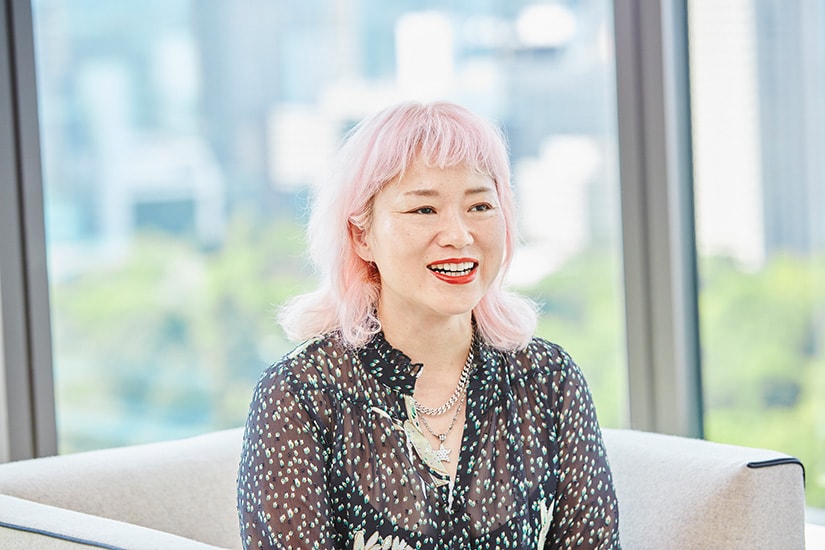
– When you found out you had breast cancer, you were probably starting a new challenge and taking many steps. What thoughts were going through your mind?
To be honest, I wasn’t particularly surprised. I didn’t have high expectations for my life, and I just thought of it as an illness that happened in the course of everyday life. But I was sick, I had no hair on my body, and it was summer, so it was hot and wearing a wig was a hassle. I met up with friends, but I found it difficult to tell people more than necessary. Sometimes they would cry. I’d tell them I was happy they were worried about me, but I wasn’t crying. I was calm, but sometimes I would find myself confused by their reactions. For the time being, I thought I’d just wait quietly for time to pass.
– How were you managing your work and child-rearing at that time?
I was doing a serial, but since it was a long time until the chemotherapy finished, I shot three months’ worth of footage all at once. I wanted to start from scratch. My daughter is still young, but I’m sure she’ll survive even if I die, and we have insurance so I’ll have money left over. I thought my family would figure out the rest. People say things like, “If you say that, what about your daughter who’s left behind…” but I thought things would work out somehow. I believe that no matter what happens to me, my daughter will be able to live her life happily.
– It seems like you believe in and respect your daughter as an individual. Was there anything you were conscious of when communicating with your daughter?
Genetic testing revealed that my daughter is at high risk for breast and ovarian cancer, which means there’s a chance she could develop the illness. I want to prepare her for it if it were to happen. While there’s little I can do but prepare to eliminate any worries, I’ve kept all the documents I need to know if I were to develop it so I can explain them to her. I get along well with the doctors, so I’m sure they’ll be able to help me. The doctors sometimes come into the store, and I make sure to greet them and tell them that they’ll help me if anything happens. I tell them this on a daily basis, so I think she has a vague sense that cancer isn’t just something that happens to other people.
– It’s important to have people around you who continue to tell you about it. I actually have cancer myself, but because my mother was battling breast cancer, I was constantly told to go for regular checkups, and it was discovered early during one of my six-monthly checkups. I learned firsthand that you can’t change the possibility of getting sick, so it’s important to find it early.
That’s so true. It’s better to know than to suddenly hit puberty and think that you might get cancer too. Wouldn’t it be cruel for her to read an article about cancer for the first time or hear from someone that she’s at risk because of her genetics when she’s just starting to understand things? So I want her to hear about it frequently from a young age so that she’ll be like, “Oh, I get it, I get it.” When she’s old enough to get tested herself, I want her to remember that her mother used to tell her that over and over again since she was a child. Of course, there may be pros and cons, but that’s what I’m telling my daughter right now.
-Now that you have experienced the disease yourself, do you have any thoughts about the detection and prevention of breast cancer?
In my case, I happened to notice a clear lump when I was applying tanning oil. I hadn’t even noticed it before, and I was about 15kg heavier than I am now. I think I wouldn’t have noticed it unless I was really paying attention. I had both breasts removed as a precaution, but I never felt like removing my breasts would take away my feminine symbols. I’ve heard people say that you lose your femininity or that you might no longer be a woman, but in my case, I had my ovaries removed as well. I felt like I’d raised my children and my purpose was done. I looked at the scar again today and it’s healed quite nicely. Some people might be hesitant to get a breast scar, but medical science has advanced in some ways.
– Were you worried that announcing that you were a cancer patient would create a certain image?
As Harumi Kurihara’s daughter, I’d appeared in the media a little as a chef, and I’d happened to be interviewed in a newspaper and had a serial column. While I wasn’t sure if I’d live much longer, I thought it might be a good idea to do something to help someone else at least once in my life, so I decided to go public. At first, I was worried, and I consulted with my doctor at the hospital. We discussed what would happen if I went public. He warned me that all sorts of people would approach me, and that my child might be discriminated against. His biggest concern was that if I announced that my genetic test showed I had a high risk of cancer, if my daughter were to develop an illness, other kids would bully her, saying, “That child has cancer,” and she wouldn’t be able to get health insurance. There are still many issues to be addressed, so I told him that it would be good if, by the time my daughter grows up, the world were free of such worries. That’s why I’m doing this kind of work now.
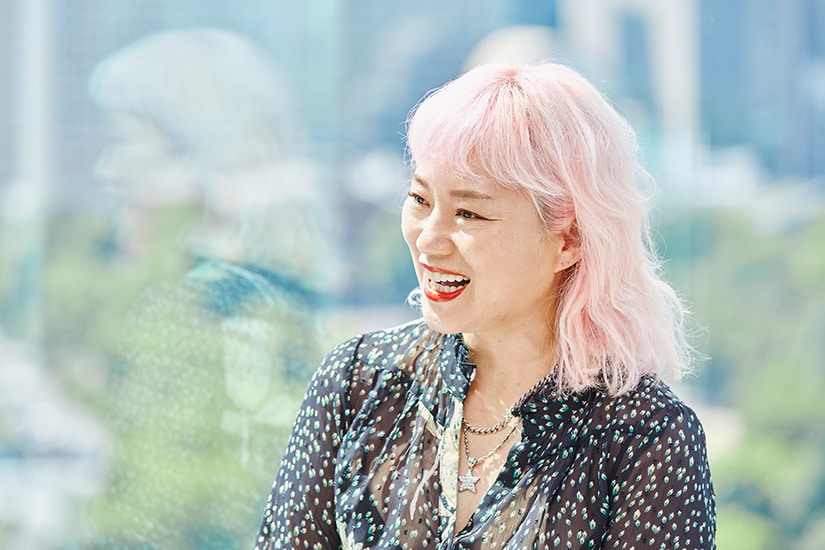
– I think one in nine people will develop breast cancer, which is a pretty good probability. I think there are actually a lot of people like you who live their daily lives dealing with it as a part of themselves.
There are a lot of them. Just yesterday, someone at my child’s school said to me, “I have cancer too,” and when I listened to their story, I found out they were at the same hospital. They said things like, “Let’s share information then,” or “Tell me about a good place to eat lunch near the hospital.” There are times when patients can talk cheerfully with each other like that, but there are also barriers between them and people who aren’t patients. Even though anyone could have the disease, many people still say they’re afraid to get tested. They say they’d be scared if they had cancer. On the other hand, I hope people will start thinking, “If it’s cancer, it’s better to find it early,” or “It’s good that it was found early.”
– Do you feel that the scary image of cancer can sometimes discourage people from getting tested?
I used to think it was a fatal disease, too. She’s fine now, but when she was diagnosed, it was highly malignant. The other day, an acquaintance of mine came to me and said, “My wife has cancer.” When I asked her at the hospital, “Cancer isn’t a fatal disease these days, is it?” she got mad at me. Cancer isn’t a disease that leads to immediate death if detected early and treated, but it is a disease that can kill if left untreated. It’s definitely a good idea to get tested. You can’t prevent it from progressing. If I’d known earlier that I might have cancer, I might have found it at stage 0 or 1. Of course, some people survive at stage 4, and there are many different types of cancer, so it varies from person to person, but I feel that early detection is important.
– I think many people put their health on the back burner when they’re busy raising children or working. Some people may be afraid of the test itself, so how do you think we can all have the opportunity to face our own bodies?
Seriously. In my case, I skipped a year and got diagnosed, so you can’t skip it. But self-paid tests are expensive, aren’t they? That’s why we should make full use of ward and city health checkups, and I wish the government would make tests to learn about our own bodies more accessible and affordable. I understand that some people are afraid of going to the gynecologist, and that they don’t like having to spread their legs or feeling pain in their chest. But even if it hurts, it’s only a few seconds in your life. Getting a flu shot hurts, too, isn’t it? Because people have a bad impression of tests. I feel like if you get tested and learn about yourself, you can make your life plan a little easier to understand. I’ve come to think that if I might not live long, I should do this and that so I don’t have any regrets. I’m glad I learned about my body in order to plan my life.
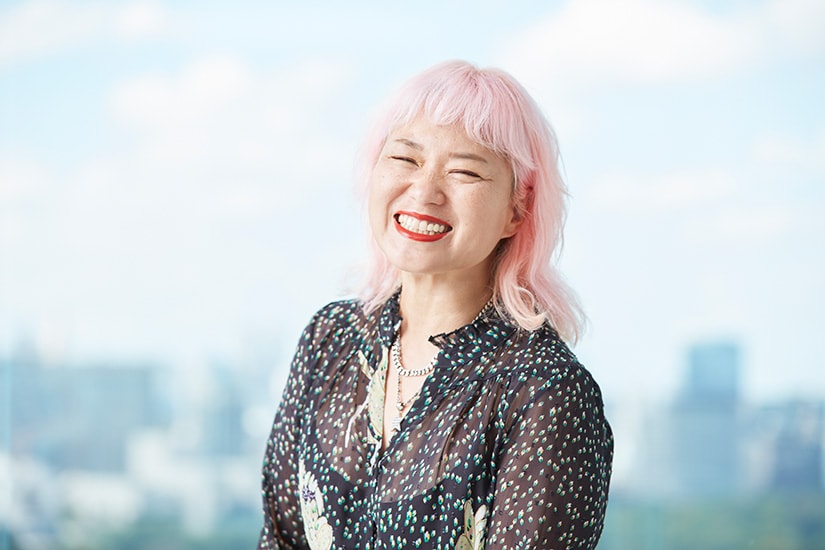
– Do you have any dreams or challenges for the future?
Yes, I want to make the company bigger. I want to hire more people, expand my business, and do a variety of things. My dream is to become a billionaire. But what does that mean? (laughs) I don’t have anything special, but I would like to be able to live a life where I can buy what I want, when I want, and eat delicious food with my family every day.
Chef Tomo Kurihara
/ CEO of Kuritmo Co., Ltd.
In addition to wholesale of fresh fish to restaurants both in Japan and overseas, he sells fish-based side dishes every Saturday at the Tsukiji Kuritmo Shoten and promotes the consumption of fish. As a chef, he writes recipe books, provides consulting services, and develops products.